
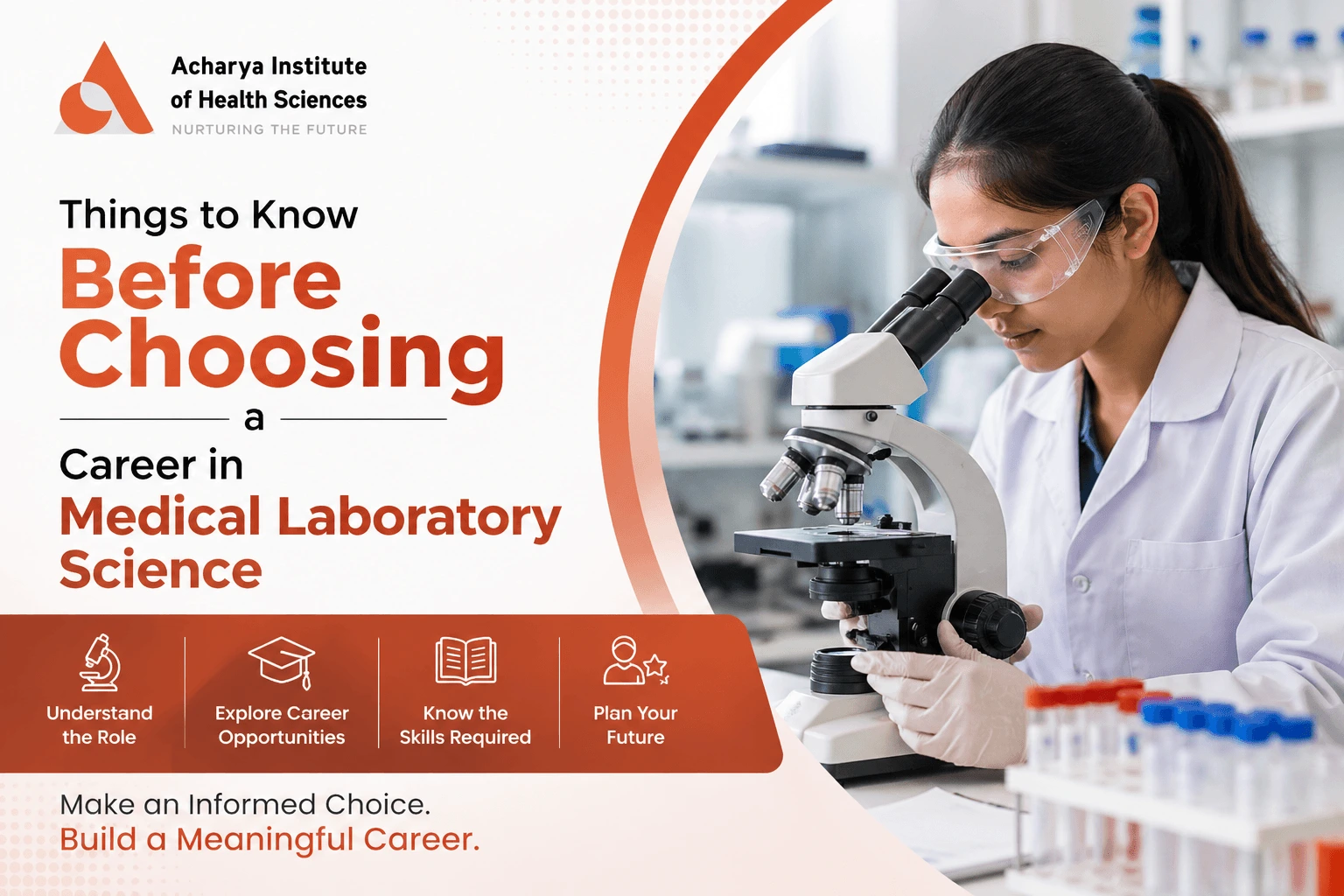
Things to Know Before Choosing a Career in Medical Laboratory Science
KEY HIGHLIGHTS
- This field is growing fast in India.
- It suits students who like science and precision.
- Accuracy matters more than memorization.
- Practical training is essential, not optional.
- Career growth improves with specialization and certification.
- The right college can shape your first job.
A strong medical laboratory science career starts with the right expectations. According to Grand View Research, India’s diagnostics services market was valued at USD 35.4 billion and is projected to grow at 13.4% CAGR through 2030. That signals steady demand for trained lab professionals.
Many students like healthcare, but not patient-facing work. They want a role that is technical, stable, and meaningful. That is exactly where this field stands out.
This guide explains the career in diagnostic laboratories in simple terms. You will learn the skills, training, work style, and growth path. You will also understand how to choose the right college wisely.
Why Medical Laboratory Science Is a Growing Career Option?
Medical lab work supports nearly every clinical decision. Doctors depend on test results before they begin treatment.
That is why the role of medical laboratories in healthcare keeps expanding. More tests, more samples, and more advanced diagnostics mean more demand for skilled staff.
The field also fits students exploring allied health science careers. It offers science-based work without years of medical school.
In India, the diagnostics sector is also seeing strong business momentum. Reuters reported in 2024 that major diagnostic companies saw higher testing demand, more samples, and revenue growth. That reflects broad market demand, not a temporary spike.
For students in Bangalore, this matters even more. The city’s healthcare ecosystem gives added exposure to labs, hospitals, and diagnostics chains.
Understanding the Role of Professionals in Diagnostic Laboratories
A lab professional does much more than collect samples. The work begins before testing and continues after reporting.
The healthcare laboratory professionals handle sample preparation, testing, quality checks, and documentation. They help convert biological data into usable medical information.
This is where lab technology and diagnostic procedures become important. Every step must follow a standard method. That reduces error and improves trust in the report.
Typical responsibilities in a diagnostic lab
- Receiving and verifying samples
- Using microscopes and analysers
- Recording test results carefully
- Maintaining cleanliness and safety
- Supporting doctors with accurate data
This work environment requires discipline. It also requires comfort with routine, detail, and repetition.
The work environment in diagnostic labs is often fast-paced. Small mistakes can affect treatment decisions. That is why the importance of accuracy in lab testing cannot be overstated.
Entry-level roles you may start with
- Lab technician
- Lab assistant
- Phlebotomy support staff
- Diagnostic support executive
These entry-level roles in medical labs help students build confidence early. They also create a base for future specialization.
Key Skills Required to Build a Career in This Field
The best lab professionals combine technical skill with steady focus. This is not a field for guesswork.
The skills required for lab technicians include observation, accuracy, time management, and communication. You must also stay calm under pressure.
You will work with laboratory equipment and techniques every day. That includes centrifuges, microscopes, automated analyzers, and sample preparation tools.
Skills that matter most
| Skill | Why it matters |
|---|---|
| Accuracy | Prevents report errors |
| Observation | Helps detect abnormalities |
| Technical handling | Supports equipment use |
| Communication | Helps with reporting and teamwork |
| Patience | Supports repetitive lab work |
Soft skills also matter. A technician must interact clearly with doctors, patients, and supervisors. Good communication reduces confusion. It also improves work quality and professional trust.
If you are careful, calm, and science-oriented, this field can suit you well.
Importance of Practical Training and Hands-On Experience
Theory gives you knowledge. Practical exposure gives you readiness.
This is why practical training in medical labs is a major deciding factor. A student who has only studied books often struggles in real lab settings.
Hands-on learning helps you:
- Handle samples safely
- Use equipment correctly
- Follow hygiene protocols
- Understand real-time reporting
- Build confidence before employment
Practical training also improves your understanding of lab workflow. You begin to see how small steps affect final results.
For students comparing BSc MLT colleges, this is a key filter. A strong course should not stop at classroom teaching. It should prepare you for actual lab environments.
Career Scope, Educational Path and Training Requirements
The career scope in healthcare diagnostics is wider than many students expect. It includes hospitals, private diagnostic chains, research labs, and specialized test centers.
With experience, you can move into higher roles. Some paths also lead to quality control or research support.
Growth opportunities in healthcare field
- Senior lab technologist
- Quality control assistant
- Laboratory supervisor
- Research technician
- Diagnostic operations support
- Specialised pathology or microbiology roles
The growth opportunities depend on learning, accuracy, and certifications. Specialized knowledge often opens better roles.
Educational path and certification basics
Most students begin with a BSc in Medical Laboratory Technology or a related course. That is where certification and training requirements begin to matter.
| Stage | What to look for | Why it matters |
|---|---|---|
| College admission | Science eligibility | Foundation for the course |
| Practical training | Lab exposure | Builds confidence |
| Internship | Real-world work | Improves employability |
| Certification | Skill validation | Supports growth |
If you want a solid start, choose a college with a clear clinical training structure. That makes the transition to work much easier.
Challenges to Be Aware of Before Choosing This Career
Every career has pressure points. Lab science is no different. One challenge is the need for constant precision. A small error can affect a diagnosis. That creates responsibility from day one.
Another challenge is repetitive work. Some students expect variety every hour. In reality, many tasks follow strict routines. Shift work can also happen in hospitals and large labs. That may affect work-life balance.
You should also be comfortable with biological material. If you dislike handling samples, this field may feel difficult. The field is rewarding, but it is not casual. It demands focus, discipline, and emotional steadiness.
How to Choose the Right College for Medical Laboratory Science?
College choice shapes your practical exposure and early career path. It can also affect the quality of your internship.
When comparing colleges, check these points:
- Does the course include strong lab practice?
- Is the internship structured?
- Are the faculty experienced?
- Are the labs updated?
- Does the college support placement or career guidance?
What to compare before applying?
| Factor | Strong sign | Weak sign |
|---|---|---|
| Practical exposure | Regular lab sessions | Mostly theory-based |
| Internship | Planned and supervised | Informal or unclear |
| Faculty | Industry-aware staff | Limited domain experience |
| Facilities | Updated lab tools | Outdated equipment |
| Career support | Guidance and mentoring | No placement support |
You can also review the AIHS program here: BSc MLT colleges. AIHS presents the course as a practical, internship-linked program with diagnostic lab exposure.
Common mistakes students make
Many students rush into the course without checking the basics.
- They choose a college for convenience only.
- They ignore internship quality.
- They assume all lab courses are equal.
- They overlook faculty support.
- They do not ask about equipment and exposure.
These mistakes can affect job readiness later. Better research now saves trouble later.
Final Thoughts on Building a Career in Medical Laboratory Science
A medical laboratory career can be stable, respected, and meaningful. It suits students who like science and precise work.
It also supports the healthcare system in a real way. Without accurate labs, diagnosis becomes slower and weaker.
So, think beyond the degree title. Look at practical training, certifications, work exposure, and college quality. That is how you build a stronger future.