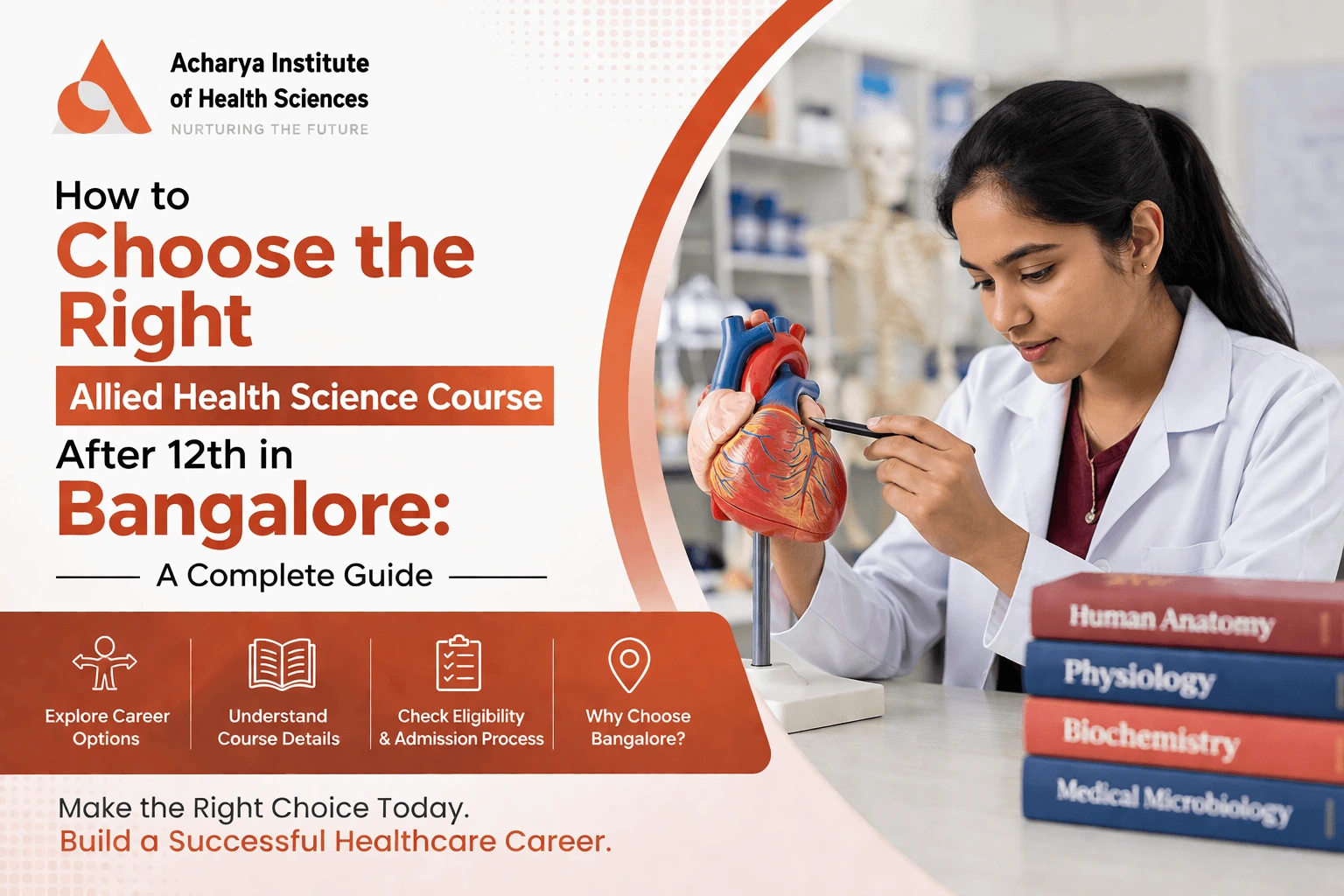
How to Choose the Right Allied Health Science Course After 12th in Bangalore: A Complete Guide
KEY HIGHLIGHTS
- Choose a course that matches your strengths and goals.
- Check practical training before you check brochures.
- Compare career scope, fees, and internship quality.
- Bangalore offers strong exposure for healthcare students.
- AIHS is one option with structured lab-based training.
- The right course should lead to real job opportunities in the healthcare field.
Students exploring allied health science courses after 12th in Bangalore often feel confused. They want a safe career. They also want a course with clear growth.
According to Grand View Research, India’s diagnostics services market was valued at USD 35.4 billion. It is projected to grow at 13.4% CAGR through 2030. That growth reflects rising demand for skilled support roles in healthcare.
That pressure is understandable. Many students know they want healthcare. They just do not know which path fits best.
This guide explains the best medical courses after 12th in simple terms. It covers healthcare courses after 12th science, course choice, practical learning, and Bangalore-specific opportunities. You will also understand what to check before joining any college.
Why Choosing the Right Course After 12th Is Important?
Your course choice affects your next few years. It also shapes your first job options. That is why factors to consider when choosing a course matter so much. A good choice aligns with your interest, effort, and long-term goals.
Students often rush because they fear missing out. But the wrong course can waste time and money. The right one supports your strengths. It also keeps you motivated during training.
This is especially true for allied health science courses. The city has many options. So, selection needs more care.
What Are Allied Health Science Courses and Why Are They in Demand?
Allied health science courses prepare students for clinical support roles. These roles work alongside doctors, nurses, and diagnosticians. They include paramedical courses and other technical healthcare programs. These courses are practical, skill-based, and job-oriented.
The demand is rising because healthcare needs more trained support staff. The World Health Organization notes that India constituted the National Commission for Allied and Healthcare Professions in 2024. It was created to register professionals across 57 allied healthcare fields.
That makes the scope of allied health science stronger than many students realize. It is not a fallback option. It is a growing career track. In Bangalore, this demand feels even more visible.
Popular Healthcare and Paramedical Courses Students Can Consider
There are several strong career options in allied health sciences. The best one depends on your interests and future plans.
Common course options
| Course | Best for | Typical work area | Career direction |
|---|---|---|---|
| BSc MLT | Students who like lab work | Diagnostic labs, hospitals | Testing and reporting |
| BSc MIT | Students interested in imaging | Radiology units | Scanning and imaging support |
| BPT | Students who enjoy recovery work | Clinics, hospitals | Physiotherapy and rehab |
| OTT | Students who like surgical support | Operating theaters | Pre- and post-surgery support |
| Dialysis Technology | Students interested in renal care | Dialysis units | Machine handling and patient care |
The medical laboratory science course is one of the most practical choices. It suits students who enjoy precision and testing.
For many students, this is one of the best medical courses. It offers technical work and a clear healthcare role.
Key Factors to Consider When Choosing the Right Course
The best choice starts with self-awareness. Your course should suit your personality and goals.
Ask yourself these questions:
- Do I enjoy science theory or hands-on work?
- Do I want patient-facing work or technical work?
- Do I want a short path to employment?
- Do I see myself in labs, imaging, rehab, or support care?
Course selection checklist
| Factor | What to check | Why it matters |
|---|---|---|
| Interest fit | Does the course match your strengths? | Helps you stay consistent |
| Skill fit | Are you comfortable with tools or people? | Improves confidence |
| Duration | Is the timeline suitable? | Affects planning |
| Training | Does it include practical exposure? | Supports job readiness |
| Growth | Does it offer future specialization? | Supports long-term value |
Students should also compare student interests and career goals honestly. A course with a strong brand but poor fit can lead to regret later.
The right course should feel manageable. It should also feel meaningful.
Understanding Career Scope, Practical Training, and Job Opportunities in Healthcare
The job opportunities in healthcare field are expanding across hospitals, labs, and specialty centers. This is one reason many students prefer healthcare education now.
The demand for healthcare professionals is not limited to doctors and nurses. Every healthcare system needs trained support staff.
Why does practical training matter?
Practical training in healthcare courses helps students move from theory to real work. It teaches equipment handling, safety, teamwork, and discipline.
Strong practical training should include:
- lab sessions
- supervised internships
- hospital observation
- equipment practice
- case-based learning
This becomes especially important in a medical laboratory science course. Accuracy and process matter every day.
Career growth after the course
Once trained, students can move into roles such as:
- lab support staff
- imaging assistant
- rehabilitation assistant
- diagnostic technician
- healthcare operations support
The job opportunities in the healthcare field often improve with experience and specialization. That is why strong training matters from the start.
Choosing the Right Course Based on Location and Opportunities
Location affects your education more than many students realize. It can shape your internship access, hospital exposure, and peer network.
That is why healthcare courses after 12th in Bangalore are attractive to many students. Bangalore has a large healthcare ecosystem and strong clinical presence.
It also gives access to more paramedical courses after 12th in Bangalore. Students can compare colleges, specializations, and training models more easily.
What should Bangalore students look for?
- hospital tie-ups
- diagnostic lab exposure
- internship structure
- placement support
- updated equipment
- faculty experience
For students comparing allied health science courses, that kind of breadth is useful. It allows better comparison across specializations.
Common mistakes students make
Students often make avoidable mistakes when choosing a course.
- They follow friends without checking fit.
- They choose only by fee.
- They ignore internship quality.
- They do not ask about equipment.
- They overlook faculty support.
These mistakes affect outcomes later. Better research now saves stress later.
Future Scope of Paramedical and Allied Health Science Careers
The future for allied health students looks steady. Healthcare is becoming more diagnostic, more technical, and more process-driven.
That makes the scope of allied health science courses stronger each year. New technologies also create new support roles.
Students who start in one area can later specialize. Some move into advanced diagnostics. Others shift into quality control or hospital operations.
Future-ready paths include
- medical diagnostics
- radiology support
- rehabilitation care
- OT assistance
- hospital administration
- advanced lab work
If you are thinking long-term, this field offers flexibility. It also offers practical value.
How to Choose the Right College for Allied Health Science Courses?
Course choice matters. College choice matters just as much.
Look for colleges that offer:
- updated curriculum
- clinical tie-ups
- real internships
- experienced faculty
- strong lab facilities
- placement guidance
Quick comparison table
| College feature | Good sign | Red flag |
|---|---|---|
| Training | Regular practicals | Only classroom teaching |
| Internships | Supervised and structured | Unclear exposure |
| Faculty | Accessible and experienced | Limited subject depth |
| Labs | Modern and functional | Outdated equipment |
| Career support | Guidance and mentoring | No support system |
When students compare healthcare courses after 12th, they should ask about real training outcomes. Not every college gives the same exposure.
Final Thoughts
Choosing the right allied health course is about fit, not fashion. Your choice should match your interests, strengths, and career goals.
The strongest courses offer practical learning and clear career outcomes. That is what helps students grow confidently.
If you are comparing allied health science courses, Bangalore gives you strong options. But the right college still makes the biggest difference.
For students who want a practical and career-focused start, AIHS is a good place to explore further. Talk to the admissions team and review the program details carefully.